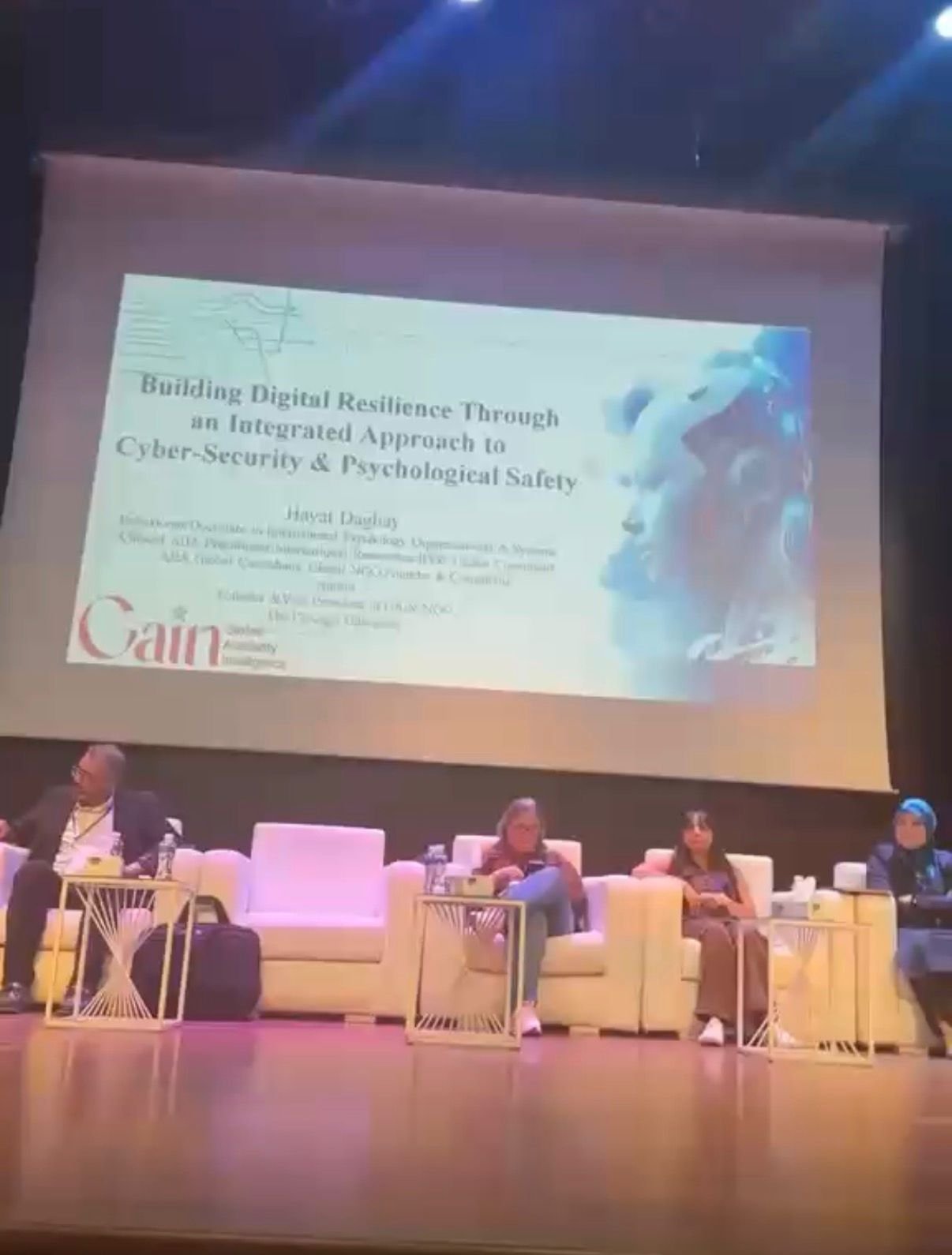




Building Digital Resilience Through an Integrated Approach to Cybersecurity and Psychological Safety
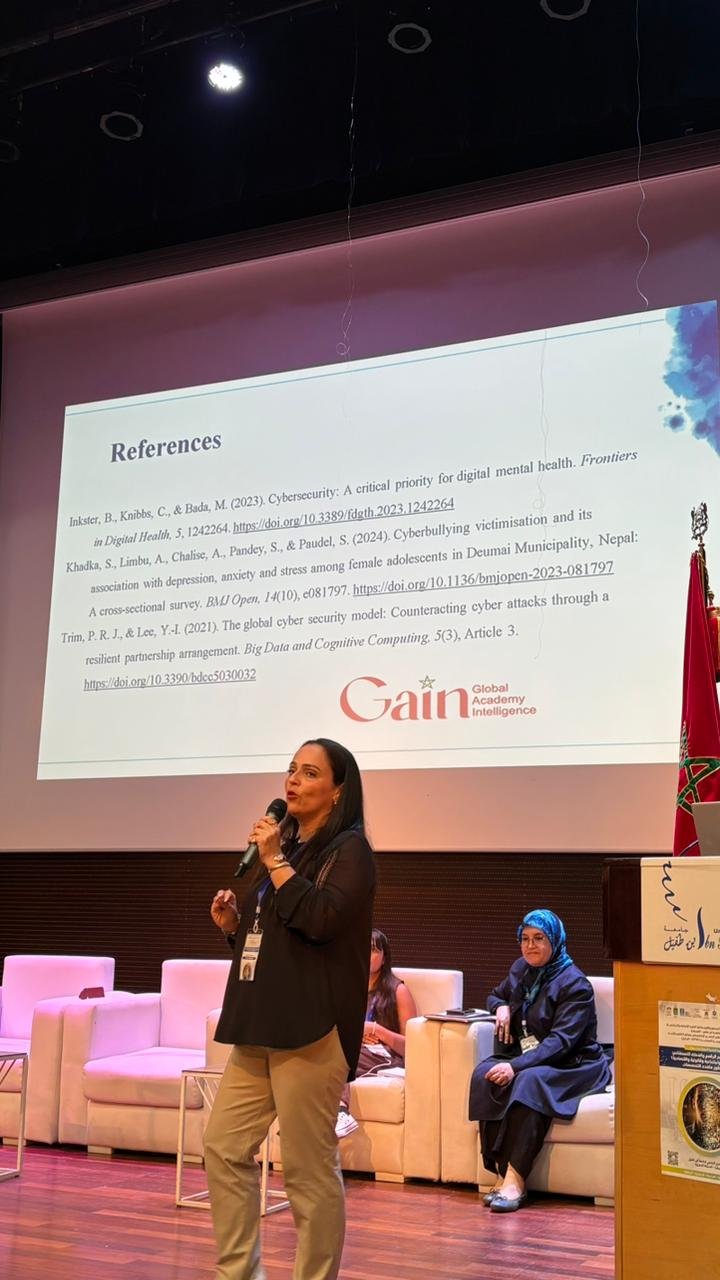
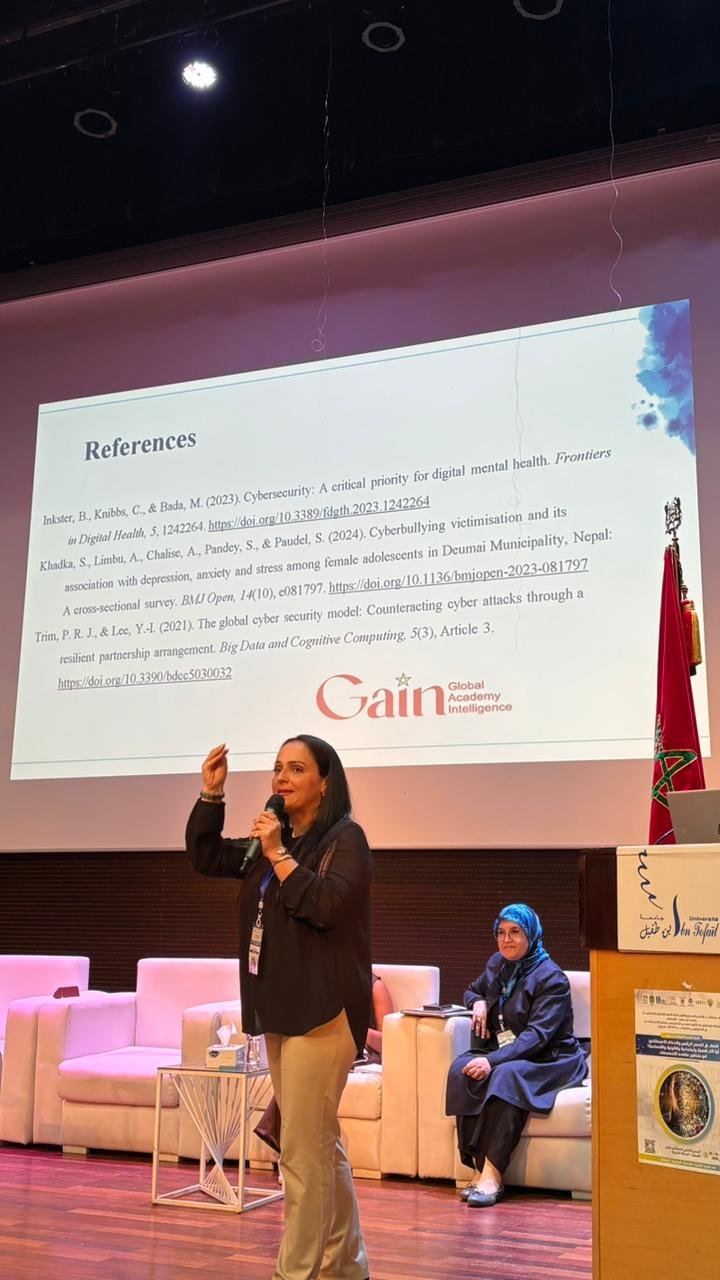
At this event, GAiN was represented by its Vice President, Hayat Daghay, an international psychologist and international researcher, with a specialization in international psychology, organizational and systems. She is also a behaviorist, grounding her analysis in behavioral sciences and applying behavior analysis as a framework for understanding emerging digital phenomena.
The presentation emphasized that cybersecurity extends beyond technical infrastructures, framing it as a human-centered domain shaped by behavior, decision-making patterns, and systemic environmental influences. It highlighted the importance of ethical practices in digital spaces, aligning with global frameworks such as the United Nations Sustainable Development Goals (SDGs), as well as ethical guidelines and regulatory approaches promoted by the European Union, with particular attention to structuring responsible and ethical artificial intelligence systems within Morocco’s evolving digital landscape.
The presentation also aimed to build competencies around the technical dimensions of artificial intelligence while raising awareness of the risks of cyberbullying within increasingly interconnected digital environments, emphasizing the importance of cyber integration that is safe, responsible, and ethically grounded.
In addition, it included the representation of her ETHIX Theory, an ethics-based behavioral framework designed to operationalize ethical decision-making within complex organizational and digital systems.
A key insight from the presentation emphasized that the safety of artificial intelligence is determined not only by technical design, but by the behavior it produces within human systems. Technology alone does not determine safety; rather, it is human behavior within the system that ultimately defines it.
By integrating psychological and behavioral sciences analysis safety into cybersecurity frameworks, the approach highlighted the need to create environments where individuals feel secure to report risks, build competencies around the frame of AI, adapt to evolving digital threats, and engage responsibly with technology. Drawing on applied behavior analysis, the discussion explored how reinforcement, learning histories, and contextual variables shape online behavior, risk perception, and adherence to security practices.
This integrated perspective positions digital resilience as the result of continuous interaction between technological systems and human behavior bridging cybersecurity with psychosocial well-being and promoting sustainable, ethical, and culturally responsive practices in the digital era